Days in Tokyo: A First-Timer's Day-by-Day Itinerary
Seven days in Tokyo, grouped by neighborhood so you never cross the city twice in one afternoon. Temples, Shibuya, teamLab, and the train tricks first-timers wish they knew.
trablog curation·7 days·35 places
A 7-day Tokyo itinerary sounds like plenty of time until you open a map for the first time. Tokyo is not one city so much as a chain of dense districts strung along a train loop, and each one could eat a full day on its own. The mistake first-timers make is treating it like Paris or Rome, picking sights off a list and zigzagging between them. You end up spending three hours a day underground.
This plan fixes that by giving each day one part of the city. You sleep in the west, work through Shinjuku and Shibuya first, swing east to Asakusa and the Skytree, come back through Ueno, then finish in the center where the airport trains leave from. The last day is built so you can drag a suitcase through it without ruining anything.
There are opinions in here, including the unpopular ones. Some famous stops deserve your whole morning. A couple deserve fifteen minutes and a photo, and this guide says which. Pacing assumes you will be wide awake at 5 a.m. for the first few days and useless by 3 p.m., because that is what a flight from the States does to you. Adjust it, copy it, make it yours.
DAY1
Day 1: Land, Get Your IC Card, and Meet Shinjuku After Dark
Arrival day, so the bar is low. Get into the city, sort out a transit card, drop your bags, and let Shinjuku do the rest. Everything today sits within about fifteen minutes of Shinjuku Station on foot, which matters when you are running on airplane sleep
TIP
Shinjuku Station has more than two hundred named exits and it defeats people daily. The habit that saves you: navigate to the exit name, not the station name. For this side of town you want the East or South exits. If you surface somewhere unfamiliar, go back inside rather than trying to walk it off above ground
Your first look at how absurdly large this city is, and the smartest possible use of a jet-lagged afternoon. Two towers, two observation decks on the 45th floor, and no reservation to arrange in advance. On a clear winter afternoon Mount Fuji shows up on the western horizon, which is the whole reason to come before dark rather than after. It is about a ten-minute walk from the station's west side through an underground passage, so you stay out of the weather
A cramped run of postwar alleys packed with yakitori counters, six or seven seats each, smoke everywhere. This is the version of Tokyo people picture before they arrive, and it is genuinely good, but go in with the right expectation: you are eating grilled skewers at a counter with strangers, not having a leisurely dinner. Some counters are cash only. Pick one with a menu posted outside if it is your first night and you do not read Japanese.
The Godzilla head mounted on the eighth-floor terrace, staring down the main Kabukicho drag. It takes about ten minutes and one photo, and that is the correct amount of time to give it. The reason it is on the list is that it drops you in the middle of Kabukicho at exactly the hour the neon is worth walking through. Kabukicho is safe to wander and loud, but ignore anyone who approaches you on the street offering a bar or a club.
Two hundred-odd shoebox bars in six narrow lanes, most seating six people at a squeeze. Worth seeing even if you do not drink, because there is nothing else like it left in central Tokyo. Two things to know before you climb the stairs: a lot of the bars add a seating charge on top of your drinks, and some are regulars-only, which they will post in English on the door. Nobody is being rude, that is simply how the street works. If you are fading, walk the lanes and save the drink for another night.
DAY2
Day 2: Meiji Jingu, Harajuku, and Shibuya at Sunset
The single best walking day in Tokyo, and it runs downhill from a forest to the busiest intersection on earth. You start at a shrine, drift through teenage Harajuku and grown-up Omotesando, and end up on a rooftop over Shibuya. Total train time is about ten minutes all day, because the whole route is one long walk south
A hundred-year-old forest of a hundred thousand donated trees, planted from scratch in the middle of the city, with the shrine at the far end. The walk in is the point. It takes about ten minutes from the Harajuku Station side under three enormous cypress torii, and the traffic noise drops away completely by the second gate. At the shrine you can write a wish on a wooden ema plaque and hang it by the camphor trees. On a Sunday morning you have a decent chance of walking into a traditional wedding procession crossing the courtyard
Four hundred meters of teen fashion, crepe stands, and rainbow cotton candy, directly across from the shrine exit. It is loud, it is packed shoulder to shoulder most of the day, and it is over in twenty-five minutes. Walk it once so you have seen it, buy a crepe, and move on. The better shopping in this neighborhood is on the side streets behind it, especially Cat Street heading southeast, which is where the vintage and streetwear shops actually are.
The zelkova-lined boulevard that runs southeast from Harajuku, and the architectural highlight of the city if you care about that sort of thing. Flagship stores here were designed by Herzog & de Meuron, SANAA, and Tadao Ando, so the buildings are worth looking up at even with an empty wallet. Good lunch territory too. Give it about an hour of slow walking, and duck into Omotesando Hills or the back lanes when you want a break from the crowd
At the quiet end of Omotesando, a Kengo Kuma building holding a collection of Asian art, with a hillside garden behind it full of moss, stone lanterns, and a teahouse. The art is a bonus. The garden is the reason to pay admission, and it is the calmest twenty minutes you will get on the west side of Tokyo. Closed Mondays and between exhibitions, so check before you build the day around it. If museums are not your thing, skip it and give the time to Cat Street instead
About a twenty-minute walk south from Omotesando, or one stop if your legs are done. Up to three thousand people cross at once when the lights change, and the trick everyone eventually learns is that the crossing looks better from above than from inside it. The Starbucks in the Tsutaya building is the classic free vantage point, though you will queue for a window seat. Hachiko, the famous dog statue, is on the northwest corner and takes about four minutes including the photo. Cross the intersection at least once on foot anyway. It is the one Tokyo cliche that lives up to itself.
If you pay to go up exactly one tower this week, make it this one. The top is an open-air rooftop about 229 meters over the crossing, with no glass in the way, and there is space to lie down on the deck. Time your slot for roughly forty-five minutes before sunset so you catch daylight, golden hour, and the lights coming on in one visit. Two warnings that matter: sunset slots sell out within minutes of release, and the rooftop closes in high wind or rain, in which case you are looking through windows one floor down
DAY3
Day 3: Slow Day West of Shibuya (Shimokitazawa, Daikanyama, Nakameguro)
Day three is when the jet lag catches up, so this one is built around cafes, vintage shops, and a riverside walk instead of monuments. Everything sits within a few minutes of Shibuya on two short train lines, and the last three stops are close enough to walk between. If you have a rainy day in the forecast for the week, this is the day to move it to.
Five minutes from Shibuya on the Keio Inokashira Line and a different planet: low buildings, no cars on most lanes, and the densest concentration of secondhand clothing in Japan. Come here for thrifting, record shops, and tiny live music venues in basements. The layout is deliberately confusing and the joy is getting mildly lost, so give it two and a half hours and do not plan a route. Grab coffee near the south exit and start walking whichever way looks interesting
One stop south of Shibuya on the Tokyu Toyoko Line, in the neighborhood where Tokyo keeps its money. T-Site is three connected pavilions of books, magazines, and a lounge upstairs where you can read anything off the shelf with a coffee. The architecture and the foreign magazine section are the draw. Around it, Daikanyama is boutiques and low-rise streets that take about forty minutes to walk end to end
A fifteen-minute walk downhill from Daikanyama brings you to the canal that Nakameguro is built along, lined with cherry trees for about four kilometers. In early April this is one of the most photographed stretches in Japan and shoulder-to-shoulder crowded. The rest of the year it is a quiet green corridor with independent coffee roasters and small boutiques on both banks, which is arguably the better version. Walk the east bank north and cross over whenever something catches your eye.
Fifteen minutes on foot east from Nakameguro, an indoor alley of about twenty stalls sharing one roof and a lot of communal tables. You sit down, order from whichever stall you are next to, and end up talking to the people beside you whether you planned to or not. It gets loud and full after eight, so arriving early is the move. Cash is safest here even though most stalls now take cards
DAY4
Day 4: Old Tokyo in Asakusa, Then Up the Skytree
Today you cross to the east side of the city and stay there. Asakusa is the oldest tourist district in Tokyo and it works best before the tour buses land, so this day starts early and ends across the river at the tallest tower in Japan. Everything is on one axis: temple, shopping street, kitchen town, river, tower
Tokyo's oldest temple, founded in the seventh century, and the one sight in this guide that genuinely rewards a sunrise alarm. You enter through Kaminarimon, the thunder gate with the four-meter red lantern that every photo of Tokyo seems to include. Inside, wave incense smoke from the big bronze burner toward yourself before approaching the main hall, which is the local custom for good health. The five-story pagoda sits to the left. At this hour you will share the courtyard with a handful of people praying and almost nobody else.
The 250-meter shopping street running from the thunder gate to the temple, in business in some form for roughly three centuries. Skip the mass-produced keychains and eat instead: freshly grilled senbei rice crackers, ningyoyaki little cakes cooked in front of you, and agemanju, which is a deep-fried sweet bun that is much better than it sounds. One local rule worth respecting is that eating while walking is frowned on here, so stand to the side of the stall you bought from
Ten minutes west on foot, a street of about 170 restaurant supply shops that most visitors never hear about. This is where Tokyo chefs buy their knives, and it is the best souvenir shopping in the city for anyone who cooks. Japanese steel knives, cast iron, ceramics, and the plastic display food you see in restaurant windows, sold as fridge magnets and keychains. Many shops close on Sundays. Budget an hour, more if you are buying a knife, since the good shops will sharpen and engrave it while you wait
The riverside strip between Asakusa and the Skytree, and the best free view in this part of the city. From the west bank you get the tower, the Asahi Beer Hall with its famous golden sculpture, and the river in a single frame. Walking across Azumabashi bridge and along the east bank to the tower takes about twenty minutes and is far more pleasant than the two-stop train ride. In late March the cherry trees here draw serious crowds.
At 634 meters this is the tallest structure in Japan, with decks at 350 and 450 meters. Straight talk on whether to go up: if you already booked Shibuya Sky for sunset, do this one in daylight or skip the elevator entirely and just wander Solamachi, the mall in the base, which has a good food floor and an aquarium. Skytree earns its ticket in two situations. One is a genuinely clear day, when Mount Fuji appears on the southwest horizon. The other is bad weather, since this deck is fully enclosed and Shibuya Sky's rooftop is not
DAY5
Day 5: Yanaka's Old Lanes, Ueno Park, and Akihabara After Dark
The busiest day on paper and the easiest in practice, because it is one long walk south through the north side of the city with two short train hops at the end. You go from a neighborhood the 1945 bombing missed, through the biggest concentration of museums in Japan, into the loudest six blocks of electronics and anime in the world. The contrast is the point.
A 170-meter shopping street of about sixty family-run shops, reached by descending a flight of stairs locals call Yuyake Dandan, the sunset staircase. There is not a single chain here. You get a butcher, a rice cracker maker, a sandal shop, and men selling grilled skewers out of a window. The neighborhood survived the war and the bubble years mostly intact, which is why it looks like Tokyo did decades ago. Come hungry and eat as you go stall to stall.
Not a morbid stop at all. This is a wooded park that happens to hold graves, including the last Tokugawa shogun, and the central avenue is a cherry tree tunnel that locals walk their dogs through. It is a ten-minute crossing on your way south and it is where you will notice how many cats live in this neighborhood. Keep your voice down and stay on the paths
About twenty minutes southwest on foot, and worth the detour for one specific thing: a tunnel of small vermilion torii gates climbing a hillside, the same idea as the famous Kyoto shrine but with no line and roughly one percent of the crowd. The main hall dates to 1706 and survived the war. In April the azalea garden on the slope is the reason half of Tokyo shows up
Fifteen minutes on from Nezu, Japan's first public park and the densest cluster of museums in the country. There is a pond covered end to end in lotus leaves in summer, a zoo with pandas, and a shrine tucked in the trees. If it is late March, be warned that this is the single most popular cherry blossom spot in Tokyo, meaning tarps on the ground from dawn and very little walking room
The best single museum in Japan and the one place to see samurai armor, swords, and Buddhist sculpture properly presented, with English labeling throughout. Focus on the Honkan building and the Japanese Gallery if you only have two hours, because trying to see all six buildings will flatten you. Closed Mondays. If your interest in national museums is polite rather than real, skip this and give the extra ninety minutes to Yanaka in the morning
The market under and alongside the elevated train tracks between Ueno and Okachimachi, about four hundred stalls of dried seafood, spices, sneakers, and shouting. It started as a black market after the war and still has that energy, with vendors calling out prices in a way you will not hear anywhere else in polite Tokyo. Twenty-five minutes of walking is enough to get the feel of it, and it puts you at the station for the hop to Akihabara
Two stops south, and best after dark when the signage is fully lit. Whether you love anime or have never watched an episode, the multi-floor shops are worth walking into once. Try one retro game store and one of the tall hobby buildings where each floor is a different obsession. Skip the maid cafes unless you are actively curious, since the standard ones charge for entry plus a photo and most people leave feeling like they paid for an experience they did not want. Yodobashi Camera Multimedia Akihabara is a decent last stop if you need electronics or a suitcase
DAY6
Day 6: Tsukiji Breakfast, teamLab Planets, and Ginza in the Evening
A south-side day that swings from a fish market breakfast to a barefoot art museum to the most expensive shopping street in Japan. It is a big geographic arc, but the transfers are short and one of them, the elevated Yurikamome line out to Toyosu, is a sightseeing ride in itself.
The wholesale auction moved to Toyosu years ago, but the outer market stayed, and it is still four hundred-odd stalls of knives, dried bonito, tamagoyaki, and standing sushi counters. Arrive early. By early afternoon a good share of the stalls are packing up, so this is a breakfast stop and not a lunch plan. Eat standing up as you walk: a skewer of grilled scallop, a slab of sweet tamagoyaki omelet on a stick, uni or fatty tuna from a counter with three seats. Professional buyers work these lanes in the early hours, so step aside for anyone moving cargo.
A ten-minute walk from the market, a former shogunal duck-hunting estate now surrounded on three sides by glass towers, with a seawater pond that rises and falls with Tokyo Bay. The teahouse sits on an island in the middle of that pond, reached by wooden bridges, and you can order matcha and a sweet and sit looking at skyscrapers over three-hundred-year-old pines. This is the calmest hour of the whole itinerary. From the far gate you walk out toward Shiodome to catch the train onward
From Shimbashi, ride the driverless Yurikamome line out over the bay to Shin-Toyosu, about twenty-five minutes with a front-window view if you get there early enough to claim the seat. teamLab Planets is a barefoot museum: you lock up your shoes at the entrance and walk through installations, several of which involve wading knee-deep in water. Wear shorts or pants that roll above the knee, and skip skirts entirely since the floors and walls are mirrored in places. Budget two hours inside. The newer half of the museum added a climbing area and gardens, so it takes longer than the older reviews suggest
Back toward the center, about ten minutes by subway. Ginza is where Japanese luxury retail performs, and even without buying anything the buildings are a show: a Uniqlo flagship twelve floors tall, Ginza Six, and the Wako clock tower on the corner of the main crossing. On weekend afternoons Chuo-dori closes to cars and people walk down the middle of the street. Itoya, the stationery store, is the one shop to actually go into. It runs several floors of paper, pens, and notebooks and is the best souvenir stop in central Tokyo
DAY7
Imperial Palace, Marunouchi, and an Easy Exit to the Airport
The last day sits in the center, which is deliberate: Tokyo Station handles the Narita trains and Hamamatsucho handles the Haneda monorail, and this route walks you past both. Everything today has coin lockers nearby, so you can check out of your hotel in the morning and still do the whole day with a bag
The former grounds of Edo Castle, now a public garden inside the palace walls, entered through the Otemon gate a few minutes from Tokyo Station. The keep itself burned down in 1657 and was never rebuilt, so what you climb is the enormous stone base, which gives you a view over the moat and the towers of Marunouchi. An hour is right. The palace buildings where the Imperial family actually lives are not open, so do not go expecting Versailles
The 1914 red brick Marunouchi facade is a genuine landmark and was restored to its original domed form about a decade ago, so stand back on the plaza and look at it before you go underground. Below is a small city: Tokyo Ramen Street with about eight regional shops in one corridor, a whole basement of confectionery, and Character Street for Studio Ghibli and Pokemon goods. Lunch here, and note where the coin lockers are while you have time to look.
Fifteen minutes south by subway, the Tokugawa family temple, with six shoguns buried behind it. The main gate dates to 1622 and is one of the oldest wooden structures left in Tokyo. Most people come for one specific composition: the temple hall in the foreground with Tokyo Tower rising orange directly behind it, which is the shot that puts old and new Tokyo in a single frame. Off to the side is a long row of small stone statues in knitted caps, a memorial for lost children. Be quiet around it
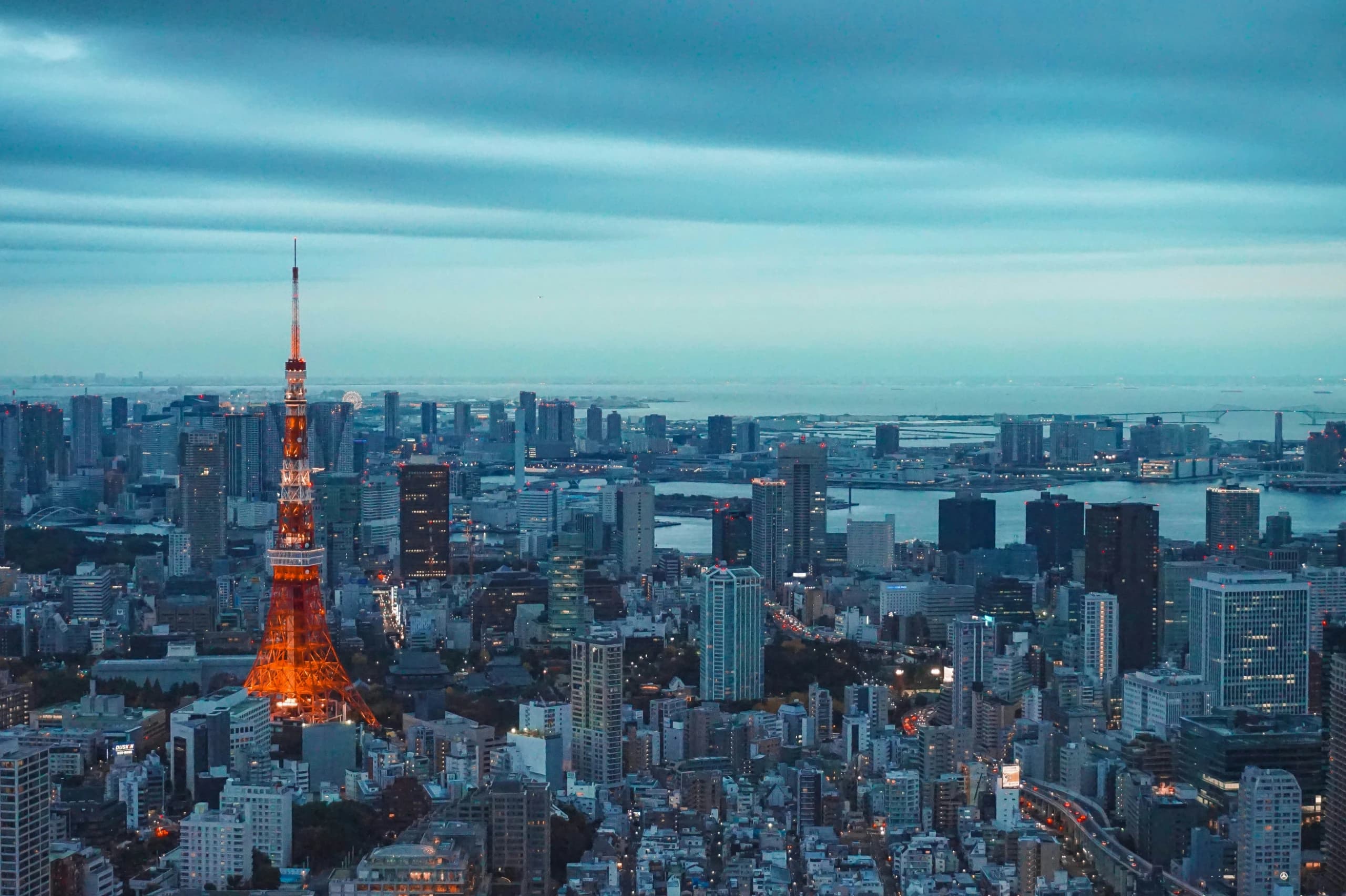
Five minutes uphill from the temple. After Shibuya Sky and the Skytree, paying to ride this one up is hard to justify, and the view is the least interesting of the three because the tower itself is missing from it. What Tokyo Tower is actually good for is being looked at. It was finished in 1958, it is taller than the Eiffel Tower it was modeled on, and it turns orange and white against the skyline in a way the newer towers cannot match. Walk the base, take the photo from Zojo-ji, and put the ticket money toward dinner
Ten minutes north, a complex that opened in 2023 around a central green with cafes and a bakery hall, and a good last hour with a suitcase because it is all indoors and well connected underground. This is also where teamLab Borderless moved to, which is the second teamLab museum and a different experience from Planets: no water, no bare feet, and artworks that wander between rooms. If your Day 6 booking fell through, this is your backup. From here it is a short ride to Hamamatsucho for the Haneda monorail, or back to Tokyo Station for the Narita Express.
Getting In From the Airport, and Where to Base Yourself
Which airport you land at changes your first two hours more than anything else in this guide. Haneda sits inside the city and puts you in central Tokyo in about half an hour. Narita is roughly sixty kilometers out and takes an hour or more no matter what you board. If you are choosing flights and the fares are close, take Haneda.
From Haneda there are two trains and they are not interchangeable. The Keikyu Line runs to Shinagawa in about fifteen minutes and continues through to Asakusa on the same track, which makes it the right choice for the east side of the city. The Tokyo Monorail runs to Hamamatsucho, where you transfer to the JR Yamanote loop, and it is the one covered by a Japan Rail Pass. Pick by where your hotel is, not by which name you recognize.
From Narita, the Narita Express goes to Tokyo Station, Shibuya, and Shinjuku with reserved seats and luggage racks. The Keisei Skyliner runs to Ueno and is faster if you are staying north. Airport limousine buses drop you at major hotels and are the least stressful option with heavy bags or small children, at the cost of getting stuck in traffic.
Now the card. Suica and Pasmo are rechargeable tap cards that work on every train, subway, and bus in Tokyo, plus most convenience stores and vending machines. If you carry an iPhone, add a Suica directly in Apple Wallet before you fly and top it up with a card. That skips the machine queue at the airport entirely. If you are on Android or want a physical card, ask for a Welcome Suica or Tourist Pasmo at an airport service counter, both of which are tourist versions with no deposit and a limited validity window.
On where to sleep, the west side is the simplest first-timer answer. Shinjuku puts you on top of the busiest station in the world with every train line you need and hotels at every price. Shibuya is younger, slightly less overwhelming to navigate, and one stop away. Tokyo Station and Ginza suit travelers who want quiet evenings and the shortest possible airport run. Asakusa is the cheapest of the group and has the most atmosphere, though you will commute west most days. Whichever you pick, stay in one hotel for the whole week. Nothing in this itinerary is far enough to justify moving.
That is seven days built so each one stays in a single part of Tokyo and the week loops from the west side out east and back to the center, where the airport trains leave from. Treat it as a starting shape rather than a schedule. If Shimokitazawa turns out to be your neighborhood, give it a second afternoon and cut a museum. If you are traveling with kids, lean on teamLab Planets, the Ueno zoo, and the Sumida riverside, and drop Golden Gai entirely.
The one thing to sort before you land is your transit card and your two timed tickets. Everything else on this list can be decided over breakfast.
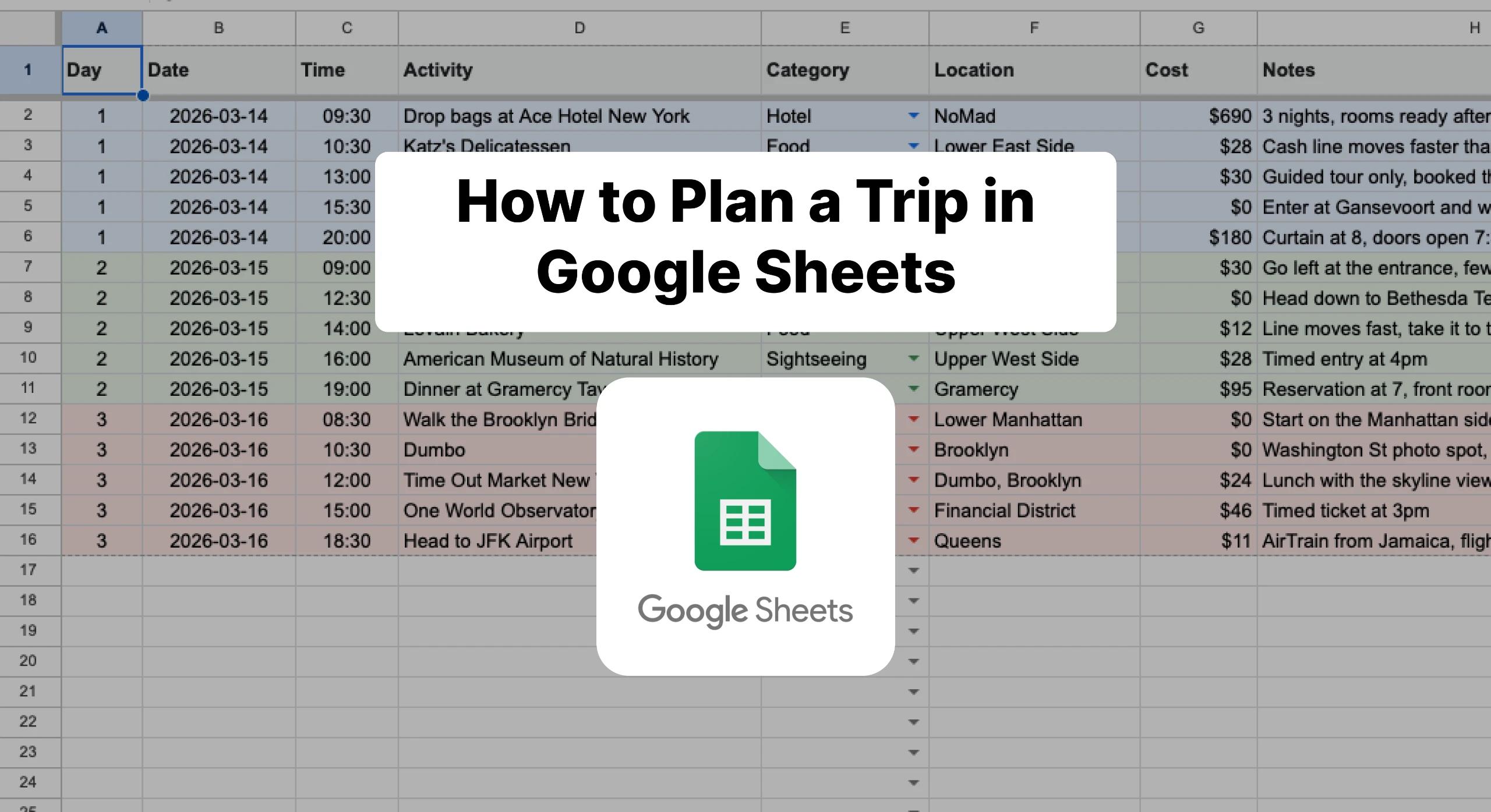
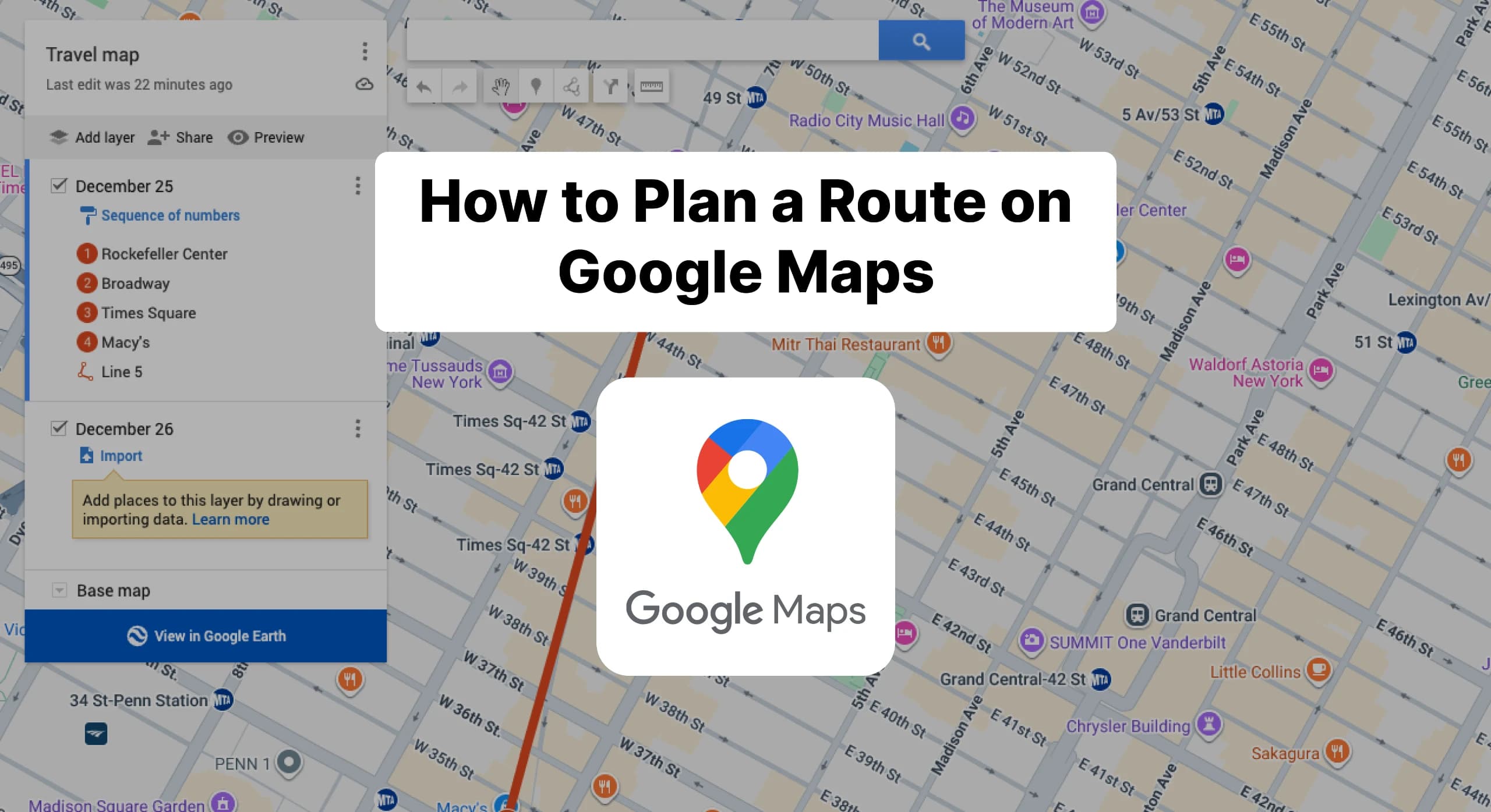
If you would rather sketch the week out yourself first, we walk through building a trip planning spreadsheet from a blank sheet, and there is a separate walkthrough on mapping a day's stops in order so you can see the walking distances before you commit to them.
Or copy this whole itinerary to your own map in one tap and start editing it into your actual trip. Move the days to match your dates, swap in the ramen shop your friend keeps talking about, add the exhibition you saw on Instagram. That is the part where a guide turns into your itinerary.